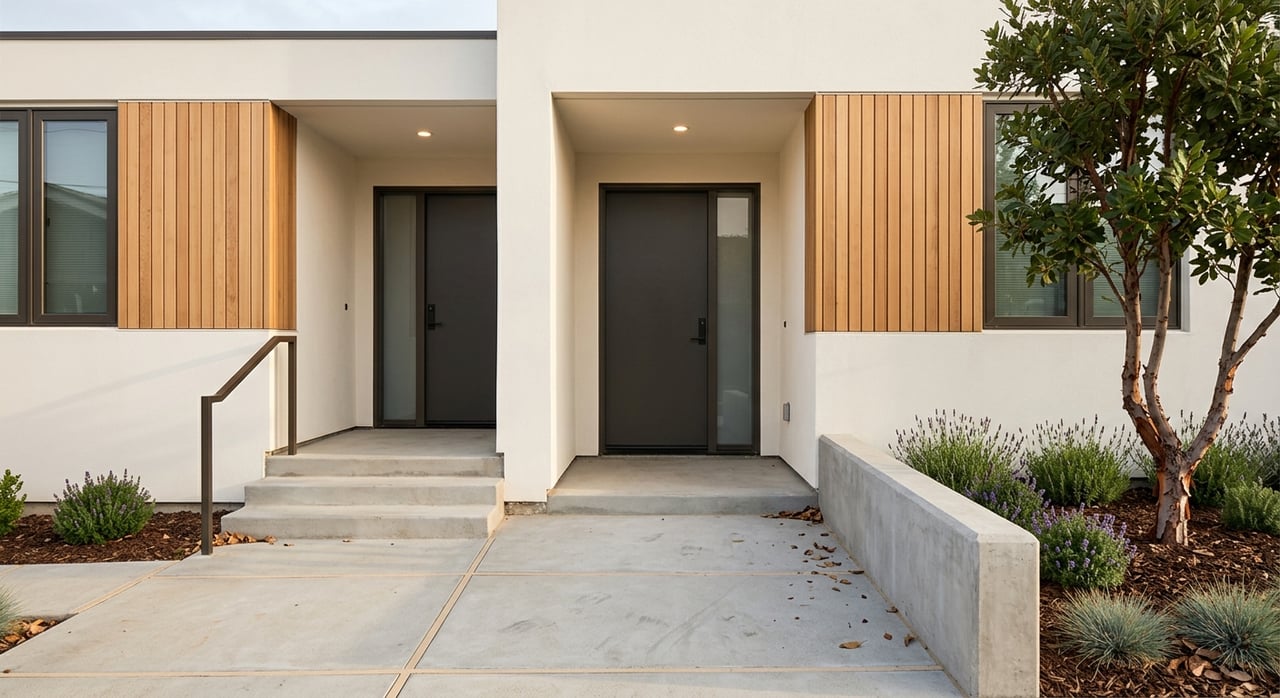
If you are deciding between a single-family home and a townhome in American Canyon, the right answer is usually less about labels and more about how you want to live day to day. You may be balancing budget, maintenance, privacy, future flexibility, and how much control you want over your property. The good news is that American Canyon gives you a clear local context to compare both options. Let’s break down what matters most so you can make a smart move.
American Canyon Housing Snapshot
American Canyon has a housing mix that leans heavily toward detached homes. The city’s FY 2023 to 2024 budget described the local supply as about 80% single-family homes, 14% mobile homes, and 6% multi-family homes.
That matters because your choices may not be evenly available. If you want a townhome, you may have fewer options inside the city limits and may need to act quickly when one matches your needs.
The city also has a strong ownership profile. Census QuickFacts shows a 74.3% owner-occupied housing rate, a median owner-occupied value of $692,600, and a July 1, 2025 population estimate of 22,773.
Recent pricing also shows why buyers compare property types closely. Redfin reported a March 2026 median sale price of $680,000, while Zillow showed a median list price of $756,665 on April 30, 2026.
Single-Family Homes in American Canyon
Single-family homes often appeal to buyers who want more control over their space. In a standard subdivision, you typically own the home and the lot, which can give you more freedom than a property inside a common-interest development.
In California, ownership structure matters more than appearance alone. The Department of Real Estate notes that subdivision type is defined by ownership rights, not just how a building looks from the street.
That distinction is important when you compare a detached home with an attached home. A detached home often lines up better with buyers who want fewer shared decisions and more direct control over the site itself.
More Private Outdoor Space
If outdoor space is high on your list, a single-family home may be the cleaner fit. You may have more room for a yard, garden, patio, or just a little separation from neighboring homes.
That can feel especially appealing in American Canyon, where public open space is part of the local lifestyle. The city highlights places such as Newell Open Space Preserve and the Wetlands & Napa River Bay Trail, so many buyers like the combination of private outdoor space at home and easy access to public trails and parks.
More Flexibility Over Time
A detached home can also offer more long-term flexibility. American Canyon allows accessory dwelling units in single-family and multi-family zoning districts, including attached, detached, conversion, and junior ADUs.
The city also allows one attached ADU, one detached ADU, and one junior ADU on a property when zoning, site conditions, setbacks, and utility requirements are met. That does not mean every parcel will qualify, but it does make detached homes worth a closer look if you are thinking about future adaptability.
For some buyers, that flexibility matters just as much as the current floor plan. You may want space for extended household use, a private work area, or future changes that make the property work better over time.
What Townhome Living Usually Offers
Townhomes often attract buyers who want a lower-maintenance lifestyle. If you would rather spend less time on exterior upkeep or common-area care, a townhome can be appealing.
In California, many townhomes are part of a common-interest development. In those communities, homeowners usually own the unit or lot plus a shared interest or use right in common areas.
That setup can simplify some responsibilities, but it also means shared rules and shared costs. So the tradeoff is convenience versus control.
HOA Rules Matter
If a townhome is in a common-interest development, HOA membership is usually mandatory. The California Attorney General notes that governing documents like CC&Rs can place limits on issues such as fencing, use, and other owner decisions.
That means you should look beyond the floor plan and monthly payment. You also want to understand what rules apply to exterior changes, maintenance responsibilities, and any limits that could affect how you use the property.
California Civil Code 4525 requires the seller of a separate interest in a common-interest development to provide governing documents, current assessment and fee information, and rental-restriction disclosures before transfer. For buyers, that disclosure package is a key part of the review process.
A Possible Entry Point on Price
Townhomes can sometimes be a more budget-friendly path into homeownership when detached homes feel out of reach. That is often true in higher-priced markets where attached housing acts as an alternative for buyers who want ownership with a lower price point.
In American Canyon, though, inventory appears thin. Zillow’s townhome search returned only nine homes and included nearby areas, which suggests attached-home options within the city can be limited.
So while a townhome may help with affordability, your search may require more flexibility on timing or location. In a thin-inventory segment, preparation matters.
Cost Comparison Beyond the List Price
A smart comparison goes beyond the purchase price. Whether you are looking at a single-family home or a townhome, your real monthly and annual costs can look very different once taxes, dues, and upkeep are included.
Napa County says assessed value is generally based on market value at purchase and can increase by no more than 2% per year until a sale or new construction occurs. The county also notes that ownership changes or new construction may trigger a supplemental tax bill.
The California Board of Equalization also notes that annual property tax bills can include special assessments, special taxes, direct levies, and Mello-Roos bonds. That is why buyers should compare total carrying costs, not just base property tax.
American Canyon Parcel-Specific Costs
American Canyon’s FY 2023 to 2024 budget stated there were no Utility User Taxes or Mello-Roos assessment districts in the city at that time. However, it also identified a Landscaping and Lighting Assessment District covering LaVigne, Vintage Ranch, and Napa Junction Mixed-Use.
This is one reason parcel-specific review matters. A detached home in one subdivision and a townhome in another may have very different cost structures, even if the list prices look similar.
Quick Cost Checklist
When you compare a single-family home and a townhome, review:
- Mortgage payment
- Base property taxes
- HOA dues, if any
- Special assessments or district charges
- Insurance costs
- Expected maintenance and repair costs
That side-by-side review often makes the decision clearer. A lower list price does not always mean a lower total cost of ownership.
Control Versus Convenience
For many buyers, this is the real decision point. A single-family home usually gives you more control over the property, while a townhome usually offers more predictable shared upkeep.
If you want more say over future changes, detached living may fit better. If you want to reduce exterior maintenance and are comfortable with community rules, a townhome may feel easier to manage.
Neither option is automatically better. The better fit depends on how you rank privacy, flexibility, upkeep, and monthly cost stability.
Questions to Ask Before You Choose
Before you make an offer, it helps to narrow your decision with a few practical questions:
- Do you want more control over exterior changes and outdoor space?
- Would lower-maintenance living improve your daily routine?
- Are you comfortable with HOA rules and shared decision-making?
- Do you want future ADU potential if a property qualifies?
- Are you comparing total monthly costs, not just price?
- Are you prepared for thinner townhome inventory in American Canyon?
If you can answer those clearly, your path usually becomes easier to spot. The goal is not to chase the most popular option. It is to choose the property type that supports your life now and still works well a few years from today.
A smart home search starts with the right strategy, especially when inventory, ownership structure, and long-term flexibility all affect the decision. If you want help comparing American Canyon homes, reviewing costs, and building a strong offer plan, schedule a free consultation with Minh Tran.
FAQs
What makes single-family homes different from townhomes in American Canyon?
- Single-family homes often offer more control over the lot and exterior space, while townhomes often come with shared common areas, HOA rules, and lower-maintenance living.
Do American Canyon townhomes usually have an HOA?
- Many California townhomes are in common-interest developments, and HOA membership is usually mandatory in those communities.
Can an American Canyon single-family home have an ADU?
- Often yes, because the city allows attached, detached, conversion, and junior ADUs where zoning and site conditions allow, but eligibility depends on the specific parcel.
What costs should buyers compare for American Canyon homes?
- Buyers should compare mortgage payment, property taxes, HOA dues, special assessments, insurance, and expected maintenance, not just the list price.
Is townhome inventory limited in American Canyon?
- It appears to be relatively thin, based on the city’s housing mix and recent search results that showed few townhome listings within American Canyon itself.
Are there local assessment districts in American Canyon buyers should review?
- Yes, parcel-specific review is important because the city identified a Landscaping and Lighting Assessment District covering LaVigne, Vintage Ranch, and Napa Junction Mixed-Use.
